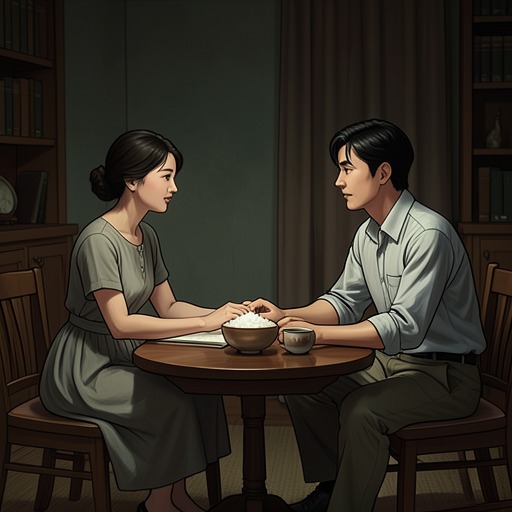
Aki Tomokawa
The Narrow Road to the Deep NorthAki Tomokawa is a former corporal in Tenji Nakamura’s platoon on the railway. Though he once irritated Nakamura with what Nakamura saw as narrowness and obsequiousness, Tomokawa’s postwar letter transforms that judgment: his persistence in looking for his former commander and his loyalty to their shared past become the means by which Nakamura begins to face that past again.
Wartime Role and Earlier Impression
Tomokawa served under Nakamura on the railway. The account gives little detail about his wartime actions, defining him instead through Nakamura’s recollection of their relationship. Nakamura had found him irritating, regarding him as narrow and obsequious; this is the limited, unflattering impression that Tomokawa’s later letter will overturn.
The Letter and a Changed Judgment
When Nakamura is frail but regaining strength, a letter arrives from Tomokawa, who has been searching for his former commander for some years and hopes the message has finally reached him. The letter brings no demand for an explanation or reckoning. Its immediate force lies in the fact of the search itself: Nakamura now sees the corporal he had dismissed as a noble and good man, and reads his loyalty as part of the kindness he has begun to recognize in his wife and daughters.
Tomokawa also reports that he has traced many of their old comrades and learned what became of them. For Nakamura, this knowledge changes the meaning of contact with the past. Since seeing his name among suspected war criminals at Shinjuku Rashomon, he had avoided former comrades, apart from the chance of working for Shiro Kota. The letter makes that avoidance seem selfish and absurd to him; he concludes that he no longer needs to live in fear of retribution from the Allies.
The Locomotive and the Public Memory of the Railway
The letter describes a group of railway engineers from the old regiment who have returned to Thailand, formerly known as Siam, and found the rusting locomotive that had made its way along the full railway in 1944. They are restoring it, with the intention of taking it to Japan for display at the Yasukuni Shrine in Tokyo as a tribute to their achievement. Tomokawa presents this undertaking as remarkable work, and Nakamura receives the news as a source of pride he can share with others.
That proposed commemoration sits within a sharply different account of the railway’s legacy. The shrine already displays locomotive C 5631 and contains the Book of Souls, which lists more than two million people who died in service to the Emperor of Japan; among them are 1,068 men convicted of war crimes and executed after the war, including men found guilty of mistreating POWs. The plaque before C 5631 does not mention the railway’s horrors or the dead who built it. The novel also stresses that the number of Asian laborers who died is unknown and that their names have been forgotten. Tomokawa’s letter reports the engineers’ intended act of remembrance, but the surrounding narrative exposes what such a celebration of achievement leaves out. It does not establish what Tomokawa himself thinks about those omissions.
Reunion as a Turning Point
Tomokawa’s letter marks, in Nakamura’s mind, the end of the fear that had governed him since Shinjuku Rashomon. Wanting now to share in the pride and companionship offered by his former comrades, Nakamura decides to travel despite his illness to meet Tomokawa in Sapporo. He arrives in midwinter, as preparations for the city’s 1966 snow festival are under way, and sees members of the Japanese Self-Defence Force making enormous ice sculptures on the drive from the airport. The episode places the intended reunion amid public displays of national workmanship and memory; its decisive change, however, is personal. Tomokawa’s long-delayed message has turned an avoided past into a reason for Nakamura to seek out an old comrade.